
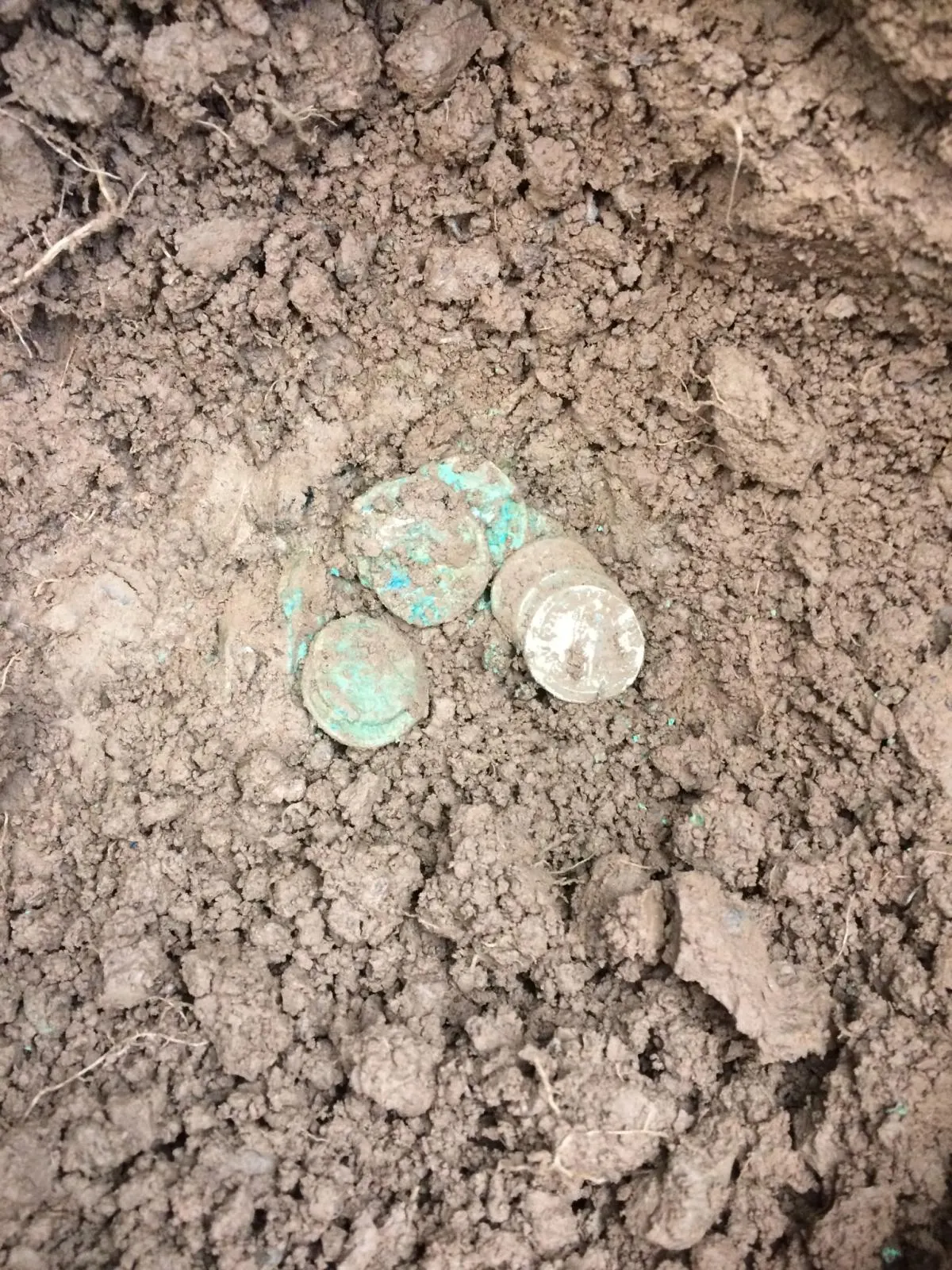
A hoard of 268 silver Roman denarii, found in a Herefordshire field and hidden from view for the better part of two thousand years, is now on free public display at Bishop’s Emporium in Leominster. It is the first time the Weobley Hoard has been shown to the public.
Found in a field near Weobley
In February 2019, Nigel Taylor was detecting on farmland near the villages of Weobley and Dilwyn, about eight miles from Leominster. He had taken up the hobby only a few months earlier, with the landowner’s permission and an agreement to share anything of value and declare it properly. The early finds were the usual junk, pieces of lead among them, and then a coin his wife Helen suspected was Roman. The local Finds Liaison Officer, Peter Reavill of Ludlow Museum, confirmed it: a denarius of Septimius Severus, who ruled from 193 to 211 AD.
Digging on, Mr Taylor uncovered the hoard itself about two feet down: 268 silver coins with the remains of the pot they were buried in, lifted onto a plastic seed tray as the light failed. The finders went home that evening knowing exactly what they had.
Six years through the treasure process
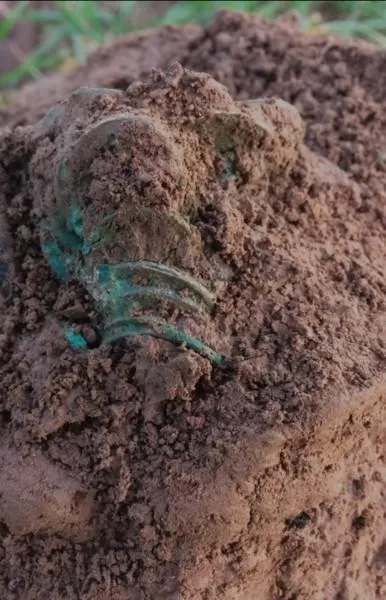
The find was kept quiet while the treasure process ran its course, partly to protect the land from anyone tempted to go looking. Many of the coins had corroded together into a single solid mass that kept the shape of its vessel; the hoard was recorded by the Portable Antiquities Scheme under the reference HESH-FF1733, and the block was 3D scanned and X-rayed at the British Museum, where the coins were cleaned, catalogued and independently valued.
After six years the hoard was returned to the finder and the landowner, and as the Hereford Times reported, it has come home to the county.
Why coins ended up in the ground
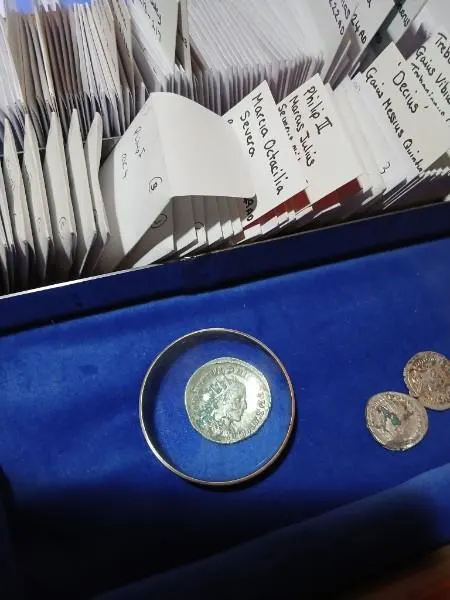
Roman Britain ran on silver. Coins moved along the roads and through the market towns of the border country for more than three centuries, and in uncertain times people did the sensible thing with wealth they could not carry: they buried it, meaning to come back. The hoards that turn up in ploughed fields across Herefordshire and the Marches are the savings of people who never returned, and each one is a small, sealed record of its moment.
That is what makes this find worth a detour. These are not coins from a museum drawer in London. They came out of a field a few miles away, found by a local man, and they are on show in the town their owners would have known.
Seeing the hoard
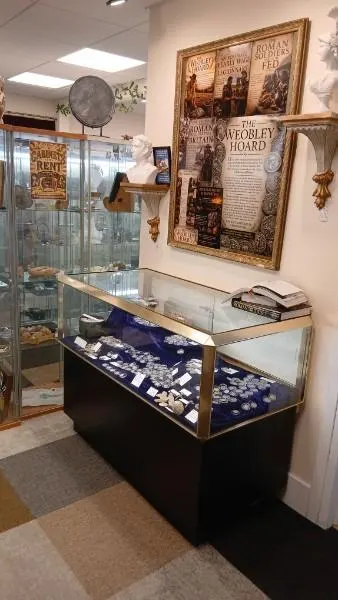
The Weobley Hoard is on display now at Bishop’s Emporium, in the old Barclays bank building at 4 Corn Street, Leominster. Entry is free. The shop is open Monday to Saturday, 9.30am to 5pm, and the display sits among two floors of antiques, taxidermy and curiosities, so give yourself longer than you planned.